Shockwave

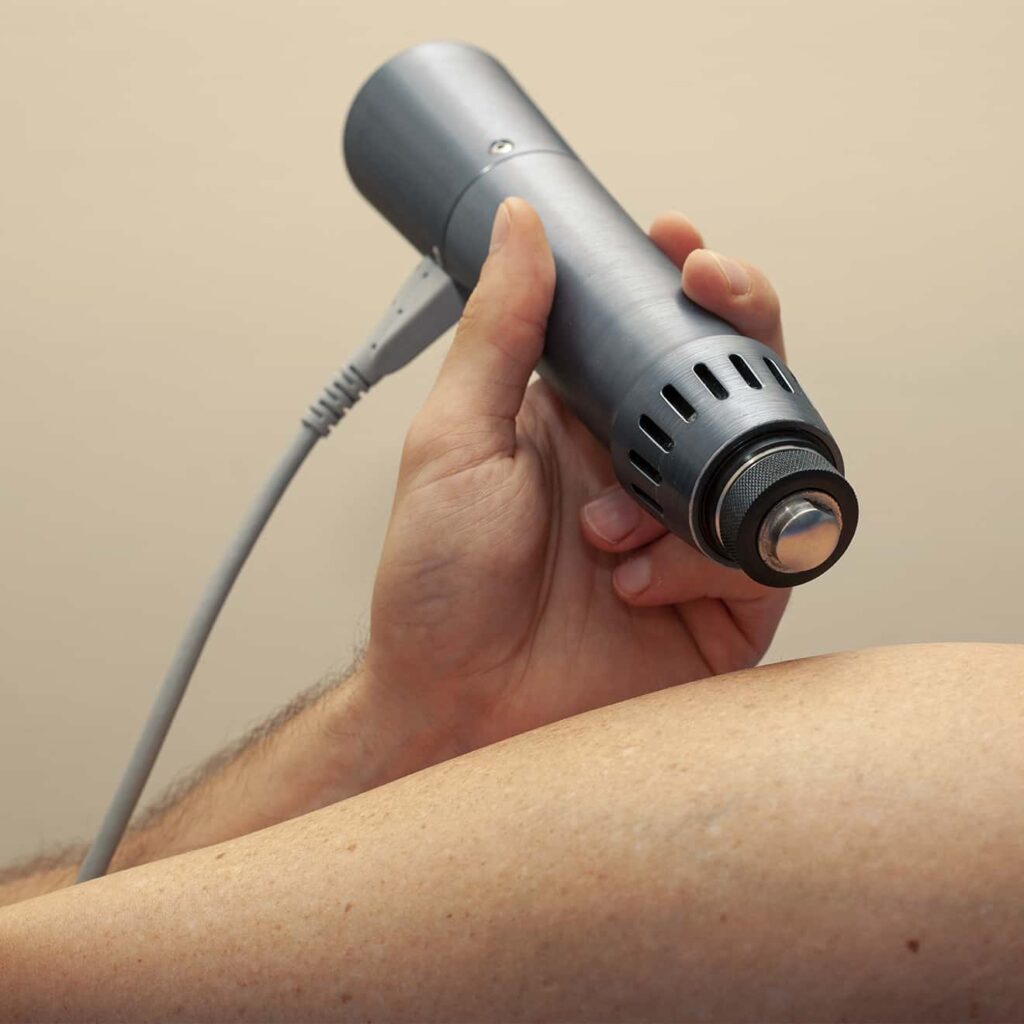
Shockwave is used for various tendon complaints, where sound vibrations are directed to the affected tendon. The shockwave device is located at our location Benoordenhout, The Hague.

Shockwave

Shockwave is mainly used in physiotherapy for long-term tendon complaints. Usually a minimum duration of complaints of three months is taken for this. Shockwave can be used for tendon complaints with calcifications in the tendon, but also for long-term tendon complaints without anything visible on the tendon.


With shock wave treatment, the patient visits for therapy once or twice a week. The treatment is repeated six times. The effect of the shockwave can immediately provide temporary pain relief. A 'bruise' after-reaction is possible.


The complaint will slowly decrease during the treatments. In addition to the shockwave treatment, in most cases an exercise program will also be made, specifically for your complaint.
Shockwave therapy generally has no serious side effects.


The most annoying side effect is that the treatment itself is often experienced as painful/unpleasant. Your physiotherapist will discuss the treatment with you in detail.


For a condition like heel spur, shockwave is one of the preferred treatments. For other tendon related complaints, physiotherapy without shockwave is sometimes preferred as a first treatment strategy.

White WaveDesign logo Fysioplein

We are ready for you

Do you have questions for us? Contact us

Contact us
Back to the overview

How does it work?

Shockwave treatment utilizes a device that, as the name suggests, produces shock waves. By ensuring the shock wave reaches the affected area or structure, the blood flow and the repair mechanism of the affected structure are activated. There are two types of shockwave therapy – radial shockwave therapy and focused shockwave therapy. Fysioplein We use radial shockwave therapy, also known as extracorporeal shockwave therapy. Radial shockwave therapy utilizes a treatment head that is placed on the skin and reaches the desired tissue with a mechanical shock wave. As a result, radial shockwave therapy is well-suited for many tendon complaints.

How does it work?
  1. Intake

    During the intake, your physical problem will be mapped out on the basis of an interview and a physical examination.

  2. Treatment

    During treatment with shockwave, the affected tendon will be treated. Homework exercises are followed afterwards. The duration of the treatment is approximately 30 minutes.

  3. Homework exercises

    After a treatment you will receive homework exercises to optimize the effect of the treatment.

  4. Follow-up appointment

    If necessary, a follow-up appointment will be scheduled. During this follow-up appointment, a brief evaluation of the previous treatment will take place. If necessary, manual therapy is applied. The exercises can also be adjusted.

Related to Shockwave

Manual therapy

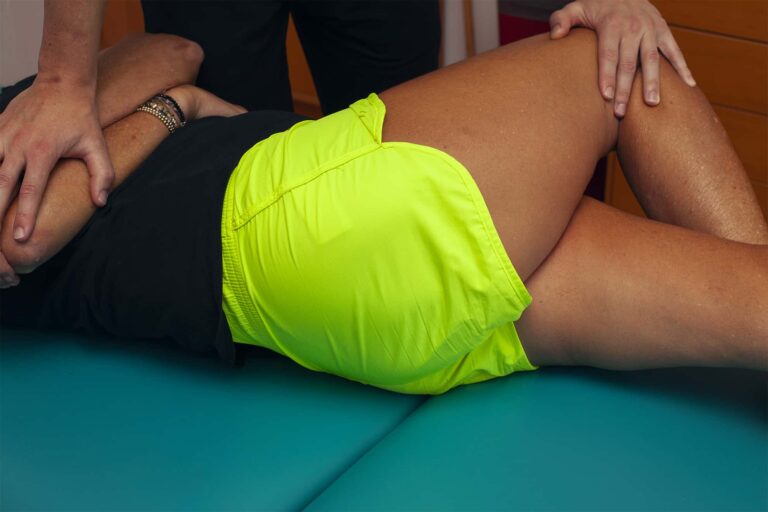
The goal of manual therapy is, on the one hand, to improve the functioning of the joints, and on the other, to improve your posture and movements. To this end, the manual therapist uses a number of specific techniques that can… within the joints.

Read more about manual therapy

Mulligan concept

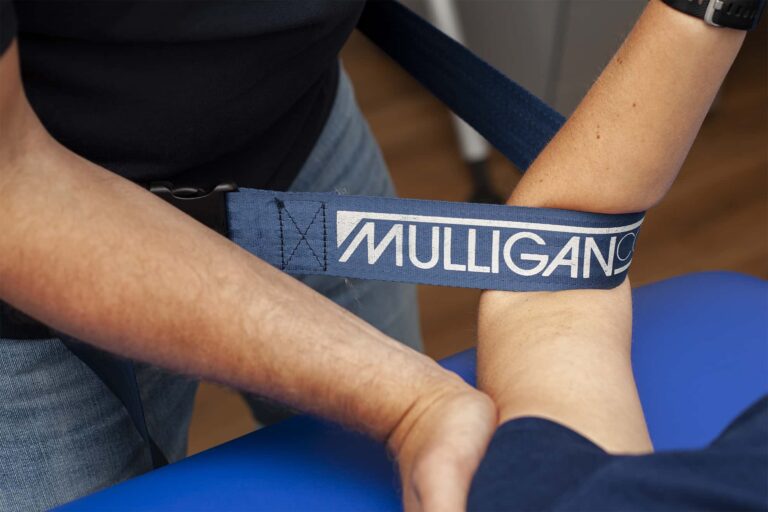
The Mulligan concept is a safe and effective way of mobilizing joints. The therapy is pain-free, should give immediate improvement, which improvement should last for a long time.

Read more about the Mulligan concept

Ultrasound

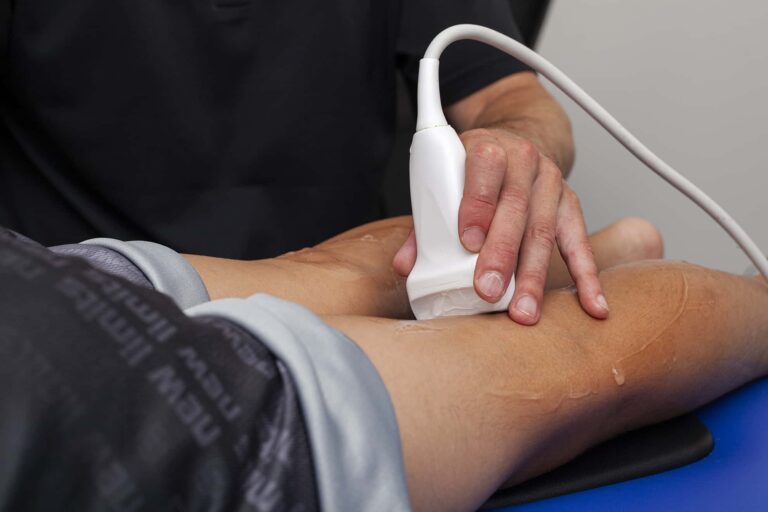
Using ultrasound, we can assess the tendons and muscles that may be involved in the complaint. This ensures that the treatment can be better tailored to the structure that is…

Read more about ultrasound

Dry Needling

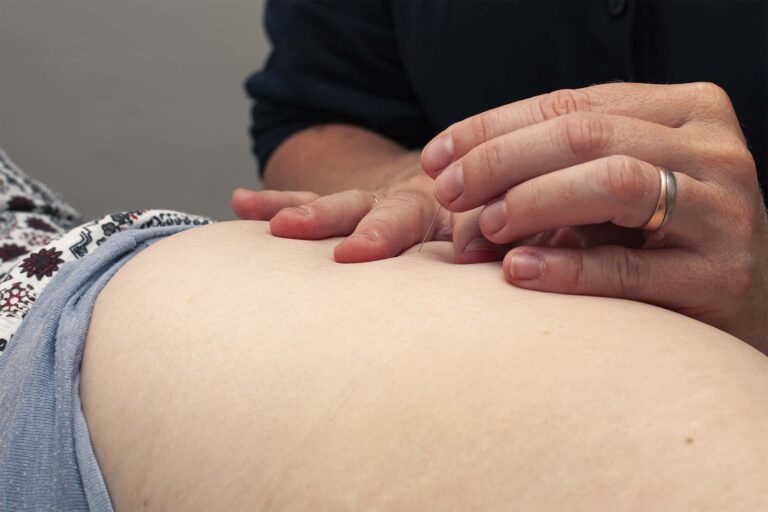
Dry needling is the insertion of a 'dry' needle (without the addition of medication) into the affected muscle(s). The treatment often results in pain relief and improved mobility of the affected muscles and joints.

Read more about dry needling

Isokinetic strength test

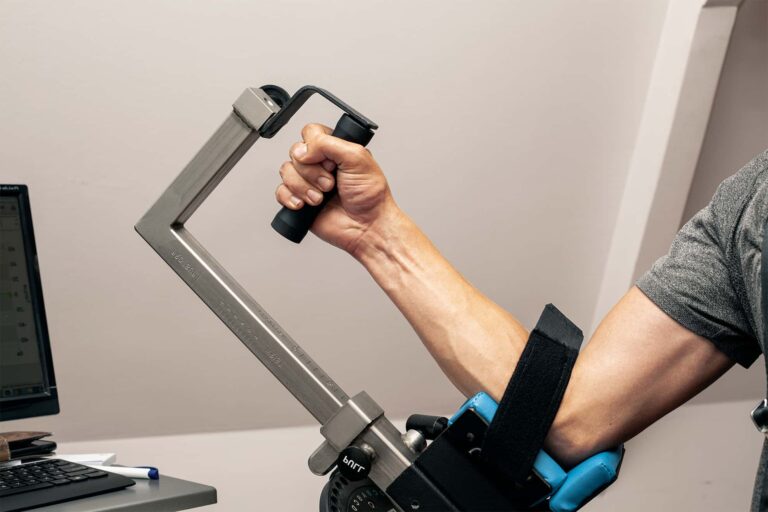
This test is widely used within our rehabilitation programs to assess where you stand in rehabilitation, what the next steps are in recovery and whether you can start with (partial) sports resumption.

Read more about the isokinetic strength test

Running analysis

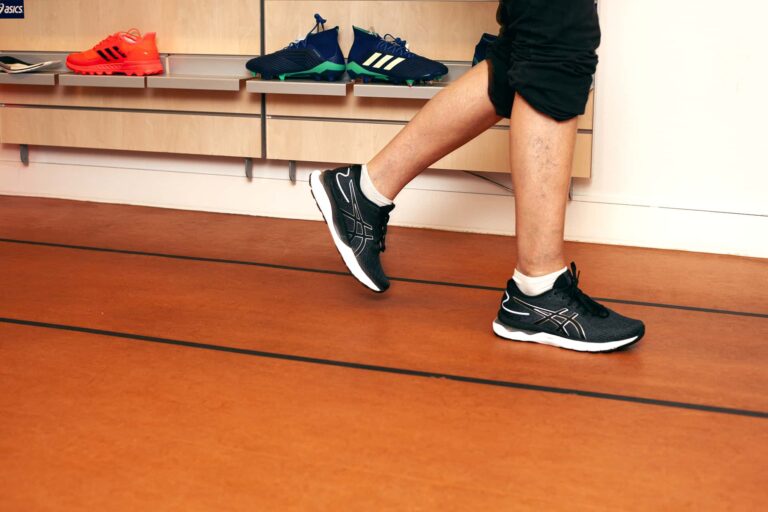
During the gait analysis, your old shoes are assessed. You are required to walk back and forth in front of the camera several times to film and analyze your walking pattern. Next, you walk several times in front of the…

Read more about gait analysis
Fysioplein

Other treatments?

If your treatment is not listed on our site, please contact us. Based on a consultation and physical examination, we will assess what might be wrong. We can then draw up a plan of action with you.

Contact us
Fysioplein
Privacy overview

This site uses cookies so that we can offer you the best possible user experience. Cookie information is stored in your browser and performs functions such as recognizing when you return to our site and helping our team understand which areas of the site you find most interesting and useful.