


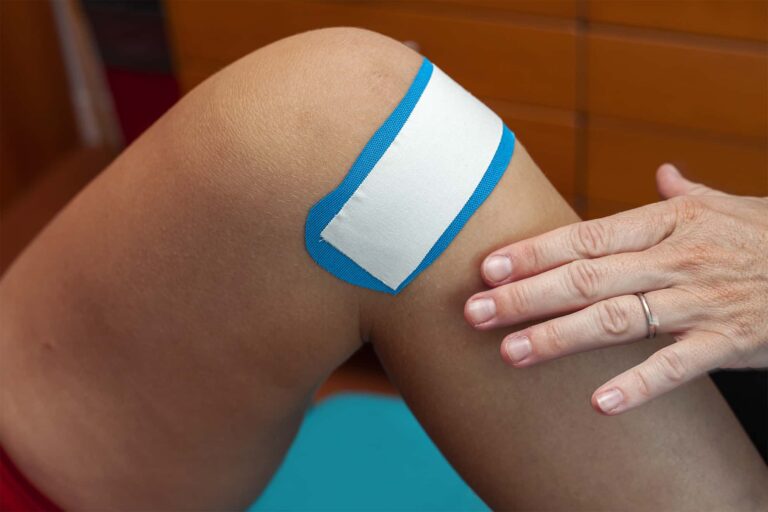
Knee distortion
With a knee sprain, it is important to have the knee examined to rule out injury. For more information about a twisted knee click here.

Fysioplein is the specialist in the region of The Hague, Delft and Rotterdam in the field of rehabilitation after an operation of the anterior cruciate ligament, but also without the cruciate ligament being reconstructed.
More about your cruciate ligament rehabilitation
To find out more about rehabilitation after a tear in the anterior cruciate ligament (rupture), read more on this page or make an appointment.
Treatment of an anterior cruciate ligament injury
The duration of treatment after an anterior cruciate ligament injury strongly depends on the goals you set for yourself. Read more about the rehabilitation on this page.
I would like to make an appointment
Do you think you have an anterior cruciate ligament injury or have you had anterior cruciate ligament reconstruction? Make an appointment here.
The anterior cruciate ligament is an important structure in the knee that ensures that the knee remains stable during movement. This cruciate ligament can tear as a result of a (sports) trauma. Most people feel something 'pop' and the knee swells within a few minutes. If you suspect an anterior cruciate ligament injury, it is always wise to have the knee examined by one of our physiotherapists.
If you suspect an anterior cruciate ligament injury, we ask your GP to refer you to an orthopedist for further assessment of your knee.
You can choose not to operate after an anterior cruciate ligament injury or to intervene too surgically. The choice for these two options is mainly determined by your (sports) goals and the degree of instability of the knee.
The anterior cruciate ligament stabilizes the knee during forward movements, but also during rotational movements. The most common cause of anterior cruciate ligament rupture (tear) is a 'torque moment' in combination with the knee falling inwards. These movements are common in ball sports and skiing.
An anterior cruciate ligament rupture will never heal, but with good control and muscle strength, the knee can become stable again so that you can do a lot with it. If there is an anterior cruciate ligament rupture, a choice must be made between reconstruction of the anterior cruciate ligament or a 'conservative' trajectory, ie without surgery. That choice is determined by the goals you set yourself and the degree of instability of the knee. Naturally, this choice is made in consultation with you and the orthopaedist.
Your rehabilitation is specifically tailored to the goals you have set. The first phase focuses on controlling pain and swelling. This is followed by strength training and, ultimately, the transition to sport-related exercises.
During the intake, your knee problem will be mapped out on the basis of an interview and a physical examination.
After the intake, a treatment plan is drawn up and discussed with you.
If you have knee problems, you will be treated according to one of our care plans. This care plan has been specially developed for knee complaints and shows good results.
Tests are taken at fixed times and questionnaires are completed to monitor your rehabilitation. The outcome is evaluated and the treatment plan adjusted accordingly.
In the first instance, individual agreements will be made with you. As soon as the knee allows us to practice in our exercise room, we get to work. This is done in groups with a maximum of three people per group.
To treatments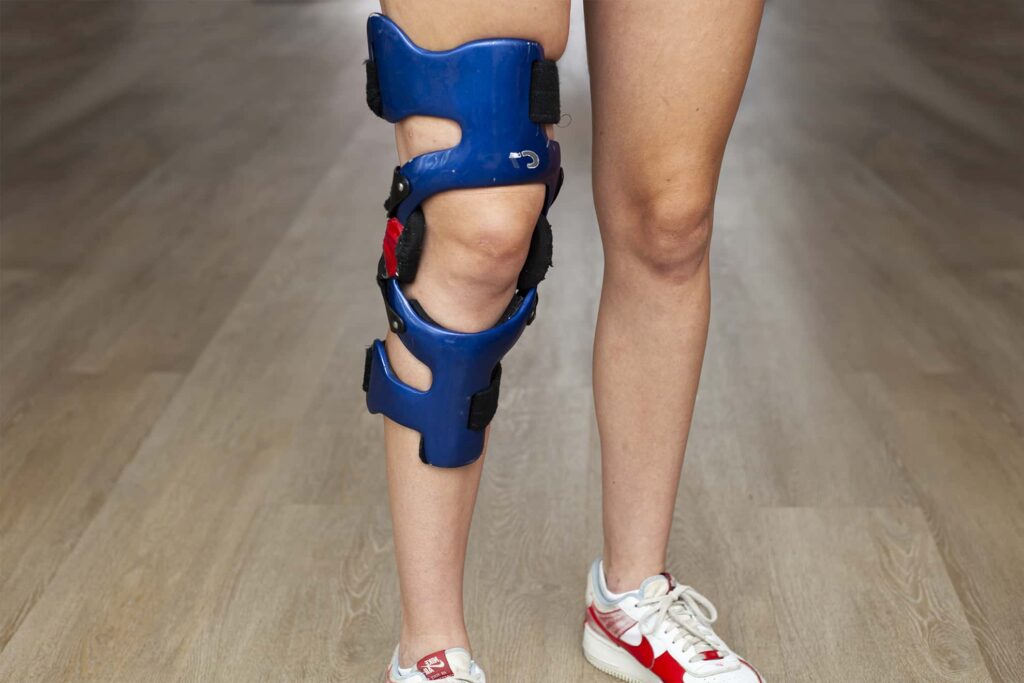
During rehabilitation after an anterior cruciate ligament rupture, in addition to the use of exercise therapy, your walking pattern is also examined, especially if you want to play sports. In addition, shoe advice is scheduled. Good shoes are essential to prevent, again, a rupture. If you have the right shoes, we also look at your walking pattern. For this, you take part in a walking training, which is provided by one of our physiotherapists. You will be guided in phases in resuming your sport.
The anterior cruciate ligament is an important structure in the knee that ensures that the knee remains stable during movement. This cruciate ligament can tear as a result of a (sports) trauma. Most people feel something 'pop' and the knee swells within a few minutes. If you suspect an anterior cruciate ligament injury, it is always wise to have the knee examined by one of our physiotherapists.
If you suspect an anterior cruciate ligament injury, we ask your GP to refer you to an orthopedist for further assessment of your knee.
You can choose not to operate after an anterior cruciate ligament injury or to intervene too surgically. The choice for these two options is mainly determined by your (sports) goals and the degree of instability of the knee.
The anterior cruciate ligament stabilizes the knee during forward movements, but also during rotational movements. The most common cause of anterior cruciate ligament rupture (tear) is a 'torque moment' in combination with the knee falling inwards. These movements are common in ball sports and skiing.
An anterior cruciate ligament rupture will never heal, but with good control and muscle strength, the knee can become stable again so that you can do a lot with it. If there is an anterior cruciate ligament rupture, a choice must be made between reconstruction of the anterior cruciate ligament or a 'conservative' trajectory, ie without surgery. That choice is determined by the goals you set yourself and the degree of instability of the knee. Naturally, this choice is made in consultation with you and the orthopaedist.
With a knee sprain, it is important to have the knee examined to rule out injury. For more information about a twisted knee click here.
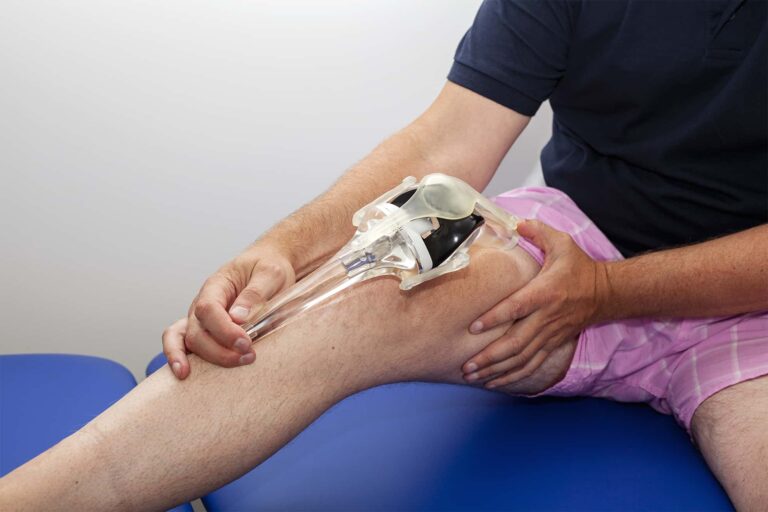
The duration of the treatment after knee replacement strongly depends on the goals you set for yourself. Read more about the rehabilitation on this page.
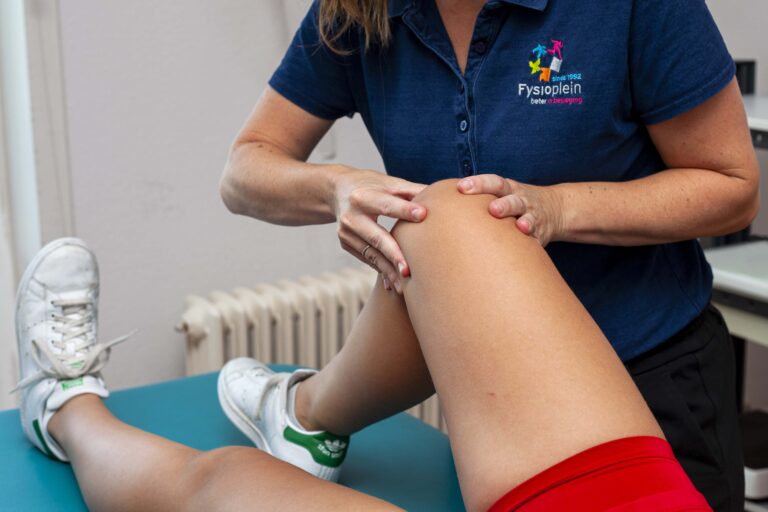
Want to know more about rehabilitation for meniscus complaints? Read more on this page or make an appointment with one of our physiotherapists.

If your complaint is not listed on our site, please contact us. Based on a conversation and physical examination, assess what may be the matter. Then we can draw up a plan of action with you.